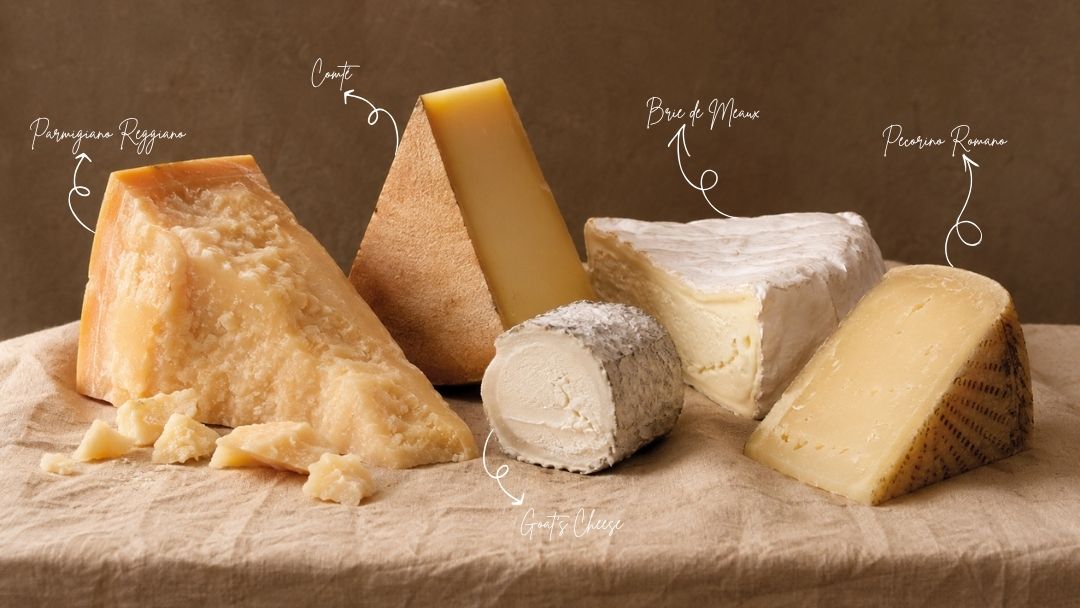
What is Brie de Meaux? The France's Most Iconic Cheese
Few cheeses have achieved the global recognition and cultural importance of Brie de Meaux. Revered throughout France and appreciated by cheese enthusiasts worldwide, this iconic bloomy rind cheese embodies centuries of cheesemaking tradition, craftsmanship, and French culinary heritage. Its creamy texture, delicate earthy aromas, and remarkable versatility have established it as one of the world's most distinguished cheeses.
Across Dubai and the UAE, Brie is a popular choice for luxury cheese boards, premium grazing platters, and gourmet gifting. Its approachable character makes it equally suited to seasoned cheese enthusiasts and those discovering French cheese for the first time.
At The Cheese Man, Brie de Meaux features in premium cheese platters, artisan cheese hampers, and carefully curated cheese boards, where its creamy texture and balanced character complement a diverse selection of cheeses and gourmet accompaniments.
To appreciate why Brie holds such an enduring place in the world of cheese, it is worth exploring its origins, traditional production, flavour profile, maturation, and the many ways it can be enjoyed.
The History of Brie Cheese: A Cheese with Royal Heritage
The history of Brie is deeply rooted in the Brie region of Île-de-France, where cheesemaking has formed part of the area's agricultural and culinary heritage for centuries. The origin of Brie cheese reaches into medieval history, while the specific name “Brie de Meaux” appears in a written source from 1379, when the agronomist Jéhan de Brie referred to the cheese in his work.
Over the centuries, Brie became closely associated with French culinary culture and gained recognition among aristocratic and royal circles. Traditional accounts also connect the cheese with Charlemagne, adding to the rich historical narrative surrounding Brie and its place in French gastronomy.
Its reputation reached a celebrated moment in 1815 at the closing banquet of the Congress of Vienna. A competition featuring around 60 cheeses was organised by Prince Metternich and the French negotiator Charles-Maurice de Talleyrand. Brie from the Villeroy farm near Meaux was declared “king of cheeses and first of desserts,” a distinction that further elevated its international reputation.
The cheese's heritage continues through its protected designation of origin. Brie de Meaux has held appellation status since 1980 and is produced according to defined geographical and production requirements. The AOP specifies raw cow's milk, traditional cheesemaking practices, and a minimum maturation period of four weeks, preserving the connection between the cheese, its territory, and its established methods.
Today, Brie remains one of France's most recognised cheeses, distinguished by its soft bloomy rind and creamy texture. While many Brie-style cheeses are now produced internationally, Brie retains a distinctive identity rooted in its protected origin, traditional production methods, and long-standing relationship with the culinary heritage of the Île-de-France region.
Types of Brie Cheese
Brie is produced in several styles, with differences in origin, milk composition, maturation, texture, and flavour. Among the best-known varieties are Brie de Meaux and Brie de Melun, alongside cream-enriched Brie styles.
- Brie de Meaux is a traditional French Brie protected by AOP status. Made from raw cow's milk, it develops a creamy, supple paste with aromas of cream, butter, mushroom, and woodland as it matures.
- Brie de Melun is also protected by AOP status and is produced in the Brie region of France. It has a smaller format and a more pronounced savoury character, with a firmer texture and stronger aroma than Brie de Meaux.
- Double Cream Brie contains additional cream, giving it a richer composition and a particularly smooth, creamy texture. Its mild, buttery character makes it well suited to fruit, preserves, crackers, and cheese boards.
- Triple Cream Brie contains an even higher proportion of cream, creating an exceptionally rich and soft texture. Its buttery, delicate flavour makes it a popular choice for celebrations, entertaining, and carefully curated cheese platters.
What Makes Brie de Meaux Different?
The cool fact about Brie cheese is that it belongs to the family of bloomy rind cheeses, recognised by the delicate white rind that develops during maturation. This edible rind is created through carefully managed mould cultures, which contribute to the cheese's characteristic aroma, texture, and gradual development.
Produced from raw cow's milk within its designated production area, Brie develops a soft, supple paste beneath its white rind. As maturation progresses, the cheese gradually softens from the outer edges towards the centre, creating the creamy texture and layered character associated with a well-matured Brie.
Brie de Meaux holds an AOP (Appellation d’Origine Protégée) designation, protecting its name and linking its production to a defined geographical area and established production requirements. The designation covers elements including the use of raw cow's milk, traditional production methods, and a minimum maturation period of four weeks. French National Institute of Origin and Quality (INAO)
This protected status connects every wheel to its regional heritage, traditional methods, and established standards of production. The result is a cheese with a distinctive identity shaped by its milk, terroir, craftsmanship, and maturation.
For those exploring artisan cheese in Dubai, Brie offers an opportunity to experience one of France's most distinguished protected cheeses, bringing centuries of regional cheesemaking heritage to premium cheese boards, grazing platters, and refined dining.
Understanding the Flavor of Brie de Meaux
Brie is defined as a combination of creamy richness, savouriness, and earthy aromas. Brie cheese's flavor develops gradually, allowing the soft texture and bloomy rind to contribute different layers to the tasting experience.
The first impression is typically creamy and buttery, with a smooth, supple mouthfeel. As the cheese opens on the palate, subtle mushroom, hazelnut, and woodland notes emerge, adding savoury complexity while preserving the gentle character associated with a well-matured Briex.
Maturation plays an important role in this progression. Younger Brie de Meaux tends to offer a fresher, milder character, while a more mature wheel develops a softer paste, fuller aroma, and greater depth of flavour. This evolution makes it particularly versatile on premium cheese boards, where it can provide creamy contrast alongside firmer and more intensely flavoured cheeses.
Its balanced character also makes Brie highly versatile when paired with accompaniments. Fresh grapes, pears, figs, honey, toasted nuts, and artisan crackers complement its creamy and earthy profile, making it a natural centrepiece for luxury cheese platters in Dubai.
How Brie Is Made
Making Brie de Meaux combines traditional craftsmanship with careful control at every stage. From raw cow's milk to its characteristic white bloomy rind, each step contributes to the creamy texture, delicate aroma, and distinctive flavour of the finished cheese.
1. Preparing the Milk
Brie de Meaux is made from raw cow's milk. Starter cultures are introduced to begin the fermentation process, helping establish the conditions that will shape the cheese's flavour as it matures.
2. Forming the Curds
Rennet is then added to encourage the milk to coagulate and separate into curds and whey. Once the curds have formed, they are ready to be transferred into moulds.
3. Ladling and Draining
The delicate curds are carefully ladled into large round moulds, where whey drains naturally. The cheeses are handled and turned during this stage to encourage even moisture distribution and help develop their characteristic shape and texture.
4. Salting and Developing the Rind
Once moulded, the cheeses are salted before entering cool, carefully controlled maturation rooms. Selected mould cultures, including Penicillium candidum, gradually develop the characteristic white bloomy rind across the surface.
5. Maturation
As the cheese matures, the moulds and enzymes associated with the rind gradually break down proteins and fats from the outside towards the centre. This softens the paste and develops the creamy texture, aromas, and flavour associated with well-matured Brie.
6. Careful Ageing
Throughout maturation, cheesemakers carefully monitor temperature, humidity, and airflow. Brie de Meaux has a minimum maturation period of four weeks under its AOP requirements, with the precise development of each wheel influenced by its maturation conditions.
The finished cheese is the result of a gradual transformation in which raw milk, traditional technique, carefully managed mould development, and time work together. The result is the soft, creamy texture and distinctive bloomy rind that have made Brie one of France's most recognised cheeses.
Brie de Meaux's Flavour Profile
What does Brie taste like? When young, it has a mild, buttery flavour with fresh cream and gentle milky notes. Its soft texture makes it easy to pair with fruits, honey, nuts, and artisan crackers.
As Brie cheese ripens, the flavour becomes deeper and more savoury. Earthy, nutty, and mushroom notes develop alongside its creamy centre, giving the cheese greater character while keeping its delicate French style.
The white rind also adds to the flavour, bringing gentle mushroom and earthy notes as the cheese matures. At the same time, the centre becomes softer and creamier, creating the contrast between the delicate rind and supple interior that makes Brie so distinctive.
Served at room temperature, Brie de Meaux is especially enjoyable on premium cheese boards and grazing platters. Fresh grapes, pears, figs, honey, toasted nuts, and artisan crackers complement its buttery richness and bring out its different layers of flavour.
Why Brie de Meaux Is Perfect for Cheese Boards
Brie is a natural choice for a well-balanced cheese board. Its soft, creamy texture creates an appealing contrast with firmer cheeses such as Parmigiano Reggiano, Comté, and Manchego, giving guests different textures and flavours to explore.
Its mild, approachable character also makes it easy to pair with a wide range of accompaniments. Fresh grapes, pears, figs, honey, toasted nuts, artisan crackers, and halal charcuterie all complement its creamy richness without overpowering the cheese.
On cheese boards in Dubai, Brie works especially well as a softer element alongside aged and more intensely flavoured varieties. It can introduce the tasting with gentle creaminess before the board moves towards firmer cheeses and deeper savoury flavours.
This versatility makes Brie de Meaux well suited to premium cheese boards, grazing platters, corporate gatherings, and luxury cheese hampers across Dubai and the UAE.
The Perfect Pairings for Brie
Brie de Meaux pairs beautifully with ingredients that complement its creamy texture, buttery flavour, and gentle earthy notes.
Fresh fruits such as grapes, pears, and figs bring natural sweetness and freshness to each bite. During Ramadan and Eid, dates make an especially appealing pairing, adding a rich sweetness that works well with Brie’s buttery character.
Walnuts and almonds add a pleasant crunch, while artisan crackers provide a simple base that allows the cheese to remain at the centre of the tasting.
Gourmet accompaniments such as fig preserves, apricot chutney, and onion marmalade introduce additional layers of sweetness and spice. These pairings complement Brie de Meaux naturally, creating variety across a premium cheese platter or grazing board.
With its creamy texture and versatile flavour, Brie is an elegant addition to cheese boards and grazing platters across Dubai and the UAE.
The Luxury of Brie with Truffle
For a more indulgent expression of Brie, truffle-infused Brie combines the creamy richness of the cheese with the distinctive aroma of black truffle. The earthy notes of truffle add depth to Brie’s buttery character, creating a pairing that feels rich yet balanced.
Truffle Brie works especially well with simple accompaniments that allow its flavour to shine. Artisan crackers, toasted nuts, fresh pears, figs, or a touch of honey can add texture and gentle sweetness without overpowering the cheese.
This combination is particularly suited to premium cheese boards, gourmet cheese platters, corporate gifting, and luxury cheese hampers across Dubai and the UAE. Its distinctive aroma adds an elegant finishing touch to a carefully curated spread.
How to Serve Brie Properly
Temperature plays an important role in enjoying Brie de Meaux at its best. Remove the cheese from refrigeration around 30 to 60 minutes before serving, depending on its size and the room temperature. This allows the paste to soften and its aromas to become more noticeable.
When arranging Brie on a cheese board, place it alongside fresh fruits, nuts, artisan crackers, and preserves that complement its creamy and earthy character. Pears, grapes, figs, honey, and toasted walnuts are particularly well suited to its flavour.
The delicate white rind is edible and can be enjoyed together with the creamy interior. It contributes gentle mushroom and earthy notes, adding another layer to the tasting experience.
Allowing Brie to reach the right temperature and pairing it thoughtfully with complementary ingredients brings out its texture, aroma, and flavour, making it an elegant addition to premium cheese boards and grazing platters.
Nutritional Benefits of Brie Cheese
Brie offers a combination of essential nutrients alongside its creamy texture and distinctive flavour. As a dairy cheese, it can contribute protein, calcium, phosphorus, and vitamin B12 to a varied and balanced diet.
Its main nutritional components include:
- Protein, which contributes to the maintenance of body tissues
- Calcium, which supports normal bones and teeth
- Phosphorus, which contributes to normal energy metabolism and bone health
- Vitamin B12, which supports normal red blood cell formation and the nervous system
- Dairy fats, which contribute to its rich texture and flavour
As Brie matures, its lactose content naturally decreases as microorganisms use lactose during cheesemaking and maturation. The amount remaining varies according to the cheese and its degree of maturation, making the lactose content of aged Brie different from that of fresh dairy products.
Enjoyed in appropriate portions alongside fruits, vegetables, whole grains, and other varied foods, Brie can be part of a balanced diet while adding flavour, texture, and nutritional variety to meals and cheese boards.
The Cheese Man's Approach to Brie
At The Cheese Man, Brie de Meaux is selected for its maturity, creamy texture, and distinctive French character. Its approachable flavour and versatility make it a natural addition to carefully curated cheese boards, where it pairs well with firmer cheeses, seasonal fruits, artisan crackers, and gourmet accompaniments.
Brie de Meaux also lends itself beautifully to premium cheese platters, luxury cheese hampers, and corporate gifting across Dubai and the UAE. Its combination of traditional craftsmanship and elegant presentation makes it well suited to intimate gatherings, celebrations, and refined entertaining.
With its centuries-old heritage, delicate bloomy rind, and evolving flavour profile, Brie remains a distinguished expression of French cheesemaking. At The Cheese Man, it continues to form part of thoughtfully curated selections that bring together exceptional cheeses, complementary flavours, and the pleasure of sharing good food.
Q&A
Q1. What is Brie de Meaux cheese?
A: Brie de Meaux is a traditional French soft-ripened cow's milk cheese protected by AOP certification. It is known for its creamy interior, edible bloomy rind, and rich, buttery flavour with delicate earthy notes.
Q2. What is the difference between Brie and Brie de Meaux?
A: Brie refers to a broader family of soft, bloomy-rind cheeses, while Brie de Meaux is a protected AOP variety from France with defined production requirements, including raw cow's milk and a minimum maturation period. Other Brie-style cheeses can differ in origin, milk, production methods, and flavour.
Q3. Is the white rind on Brie cheese edible?
A: Yes. The white bloomy rind is completely edible and develops naturally during ageing through the growth of Penicillium candidum. It contributes both aroma and flavour to the cheese.
Q4. How should Brie de Meaux be served?
A: Brie de Meaux is best served at room temperature to allow its creamy centre to soften naturally. It pairs beautifully with fresh fruit, nuts, honey, artisan crackers, and crusty bread.
Q5. What foods pair best with Brie cheese?
A: Brie de Meaux pairs exceptionally well with grapes, figs, pears, walnuts, almonds, honey, fig preserves, onion marmalade, and artisan crackers, creating a balanced combination of sweetness and creaminess.
Q6. Is Brie cheese suitable for a cheese board?
A: Yes. Brie de Meaux is one of the finest cheeses for artisan cheese boards because it complements aged cheeses, blue cheeses, halal charcuterie, fresh fruit, nuts, and gourmet accompaniments.
Q7. What makes Brie de Meaux popular in Dubai?
A: Brie de Meaux has become one of the most sought-after artisan cheeses in Dubai because of its creamy texture, approachable flavour, and versatility. It is widely featured on premium cheese boards, gourmet grazing platters, and luxury cheese hampers.
Q8. Is Brie de Meaux a good choice for festive cheese platters?
A: Absolutely. Its creamy texture pairs beautifully with dates, figs, honey, nuts, and charcuterie, making it an elegant addition to all kinds of gatherings.
Q9. Does Brie de Meaux offer nutritional benefits?
A: Brie de Meaux provides protein, calcium, phosphorus, and vitamin B12. Its rich flavour also means smaller portions can deliver a satisfying tasting experience.
10. Where can I buy authentic Brie de Meaux in Dubai?
A: Shop authentic Brie de Meaux from The Cheese Man, available individually or as part of premium cheese boards, gourmet grazing platters, curated hampers, and cheese gifts, with delivery across Dubai and the UAE.